
17 Years in Employer Brand: Dave Hazlehurst on Strategy, Pitching and What's Next
Dave Hazlehurst reflects on 17 years building PH Creative and Human Magic — the pitches, the pivots and what needs to change about employer brand strategy.

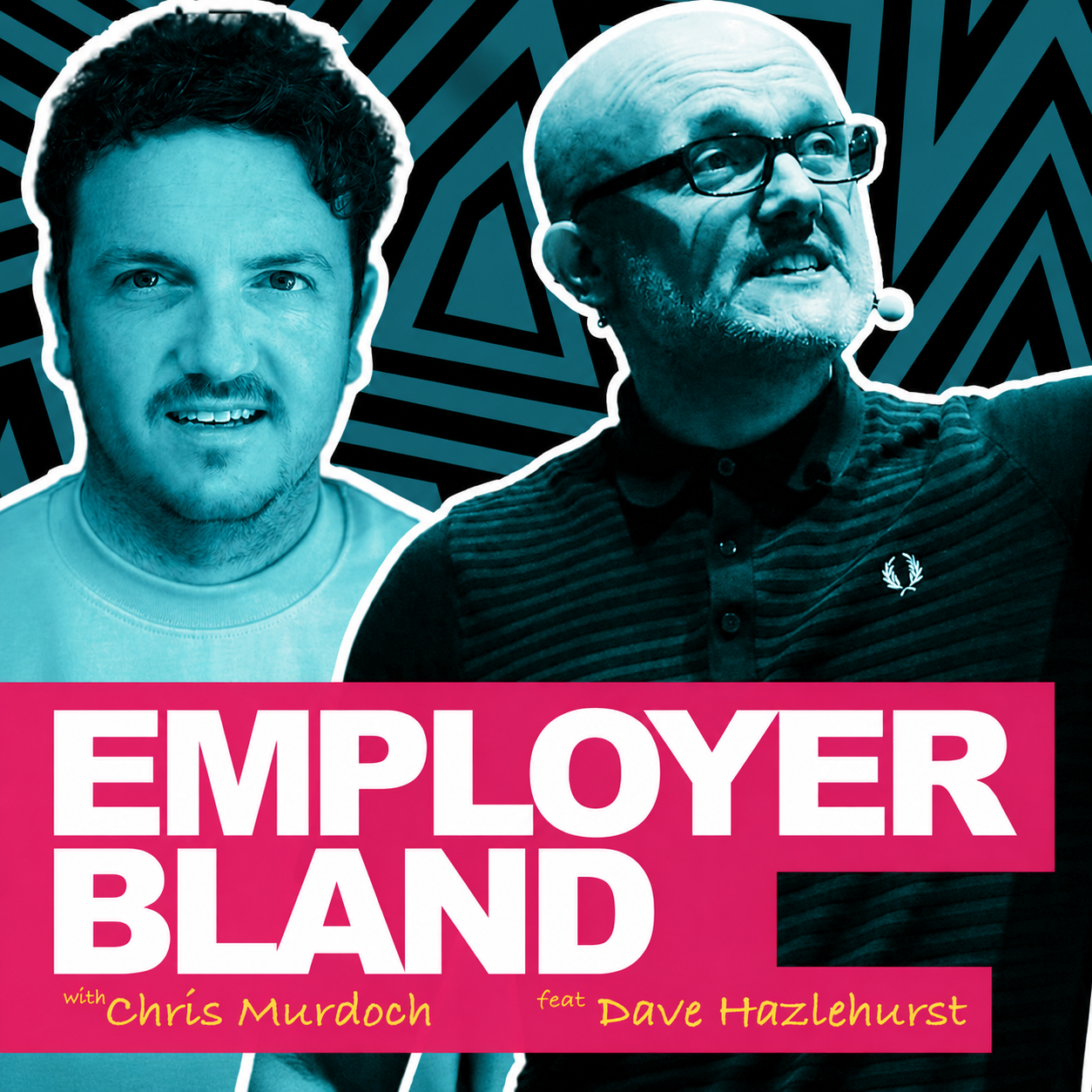
Employer brand has a short memory. Agencies close or rebrand, practitioners move roles and the institutional knowledge of what worked, what failed and why tends to disappear. Dave Hazlehurst spent 17 years at PH Creative and then Human Magic watching the discipline develop from a website problem into a strategic function — and he has a clear view of where employer brand strategy is still falling short.
Pitching: the race is won in the details, not on the track
- PH Creative's most formative pitch win — for a major Liverpool arena — required going far beyond the brief: a physically bound book, full-scale board visuals and personalised opening letters written in each stakeholder's own tone of voice, all assembled overnight by a team that had not slept.
- Dave's framing: "the race isn't won on the track" — the advantage is built in the preparation the other side cannot see, before the event starts.
- The moments that tip a pitch decision are rarely the strongest strategic argument in the room. They are often an unexpected detail, a personalised touch or an experience that signals how the agency actually works.
- A pitch loss in Switzerland taught the same lesson from the other direction: beautiful creative work that did not connect, partly because the brief had not been interrogated closely enough and partly because the execution in the room fell apart. The visuals were strong; the coherence was not.
Human connection is a skill — and COVID proved it
- PH Creative used to win roughly three out of four pitches. During COVID, they lost two major ones in quick succession. Dave's diagnosis: they had lost one of their core competitive advantages — being physically in the room with people.
- The chemistry built in face-to-face interactions, the ability to think and respond visibly, the relationship formed in a lift or over coffee — none of that translated to the screen.
- The lesson was not "screens are bad." It was that the relationship before and after the pitch matters as much as the pitch itself, and that the screen removed most of the informal space where that relationship forms.
- This extends to employer brand strategy inside organisations. The trust and connection that make an EVP credible cannot be manufactured through content alone — it depends on how people actually experience working there.
EVPs cannot be static when organisations are changing every quarter
- Dave identifies a structural problem in how employer brand strategy is practised: the research process takes months, the output is codified into a framework and that framework sits unchanged for two or three years while the business transforms around it.
- In a market where change is the only constant, an EVP developed from research that started 18 months ago may already describe an organisation that no longer exists.
- The problem is not just update frequency. It is what the research is for. Most EB research informs external expression — what to say in job ads and careers content. Dave's argument is that it should primarily inform internal strategy: where the culture needs to go, what the business needs to fix, what the stretch aspiration looks like against today's reality.
- That shift — from describing to guiding — is where employer brand becomes a business function rather than a communications function.
Employer brand has an inside-out problem
- Despite years of industry discussion about internal employer brand, most EB teams still spend the majority of their effort on external expression.
- The signals gathered through EVP research contain intelligence about organisational culture, leadership trust, change fatigue and talent risk — intelligence that most businesses are not extracting or using to guide decisions.
- Functions like offboarding, internal mobility and change communication often sit entirely outside the employer brand remit, even though they shape the lived employee experience far more than any careers site does.
- The businesses most likely to get genuine value from employer brand work are those where the EB function has influence over strategic decisions, not just content calendars.
Voyse angle
Much of what Dave describes plays out for candidates before they ever encounter the employer brand as it was intended. The careers site and the job pages connected to it are where the gap between declared culture and felt culture becomes most visible — and where a coherent, honest expression of what work there actually looks like either closes or widens the distance.
Listen
Listen to the full episode:
https://permalink.castos.com/podcast/38144/episode/2455608About Voyse
Voyse helps talent acquisition and employer brand teams build ATS-connected careers sites that actually reflect who they are — no developer resource required.
Find out more →